


--By RadioGuru
The Baofeng DM-32UV is a dual-band portable radio supporting both analog and digital DMR, offered by one of the best-known Chinese manufacturers in the radio communications field.

It is designed for users who want to step into the world of DMR without spending a large amount of money, while still enjoying a rich feature set and more than adequate transmit power.
Its competitive price makes it highly accessible, provided one is willing to accept a few compromises in terms of size and overall refinement. While it doesn’t quite reach the level of higher-end models, it remains more than satisfactory for practical, everyday use.
The radio covers the standard VHF and UHF bands and also includes the aeronautical band in receive mode, further expanding its monitoring capabilities.
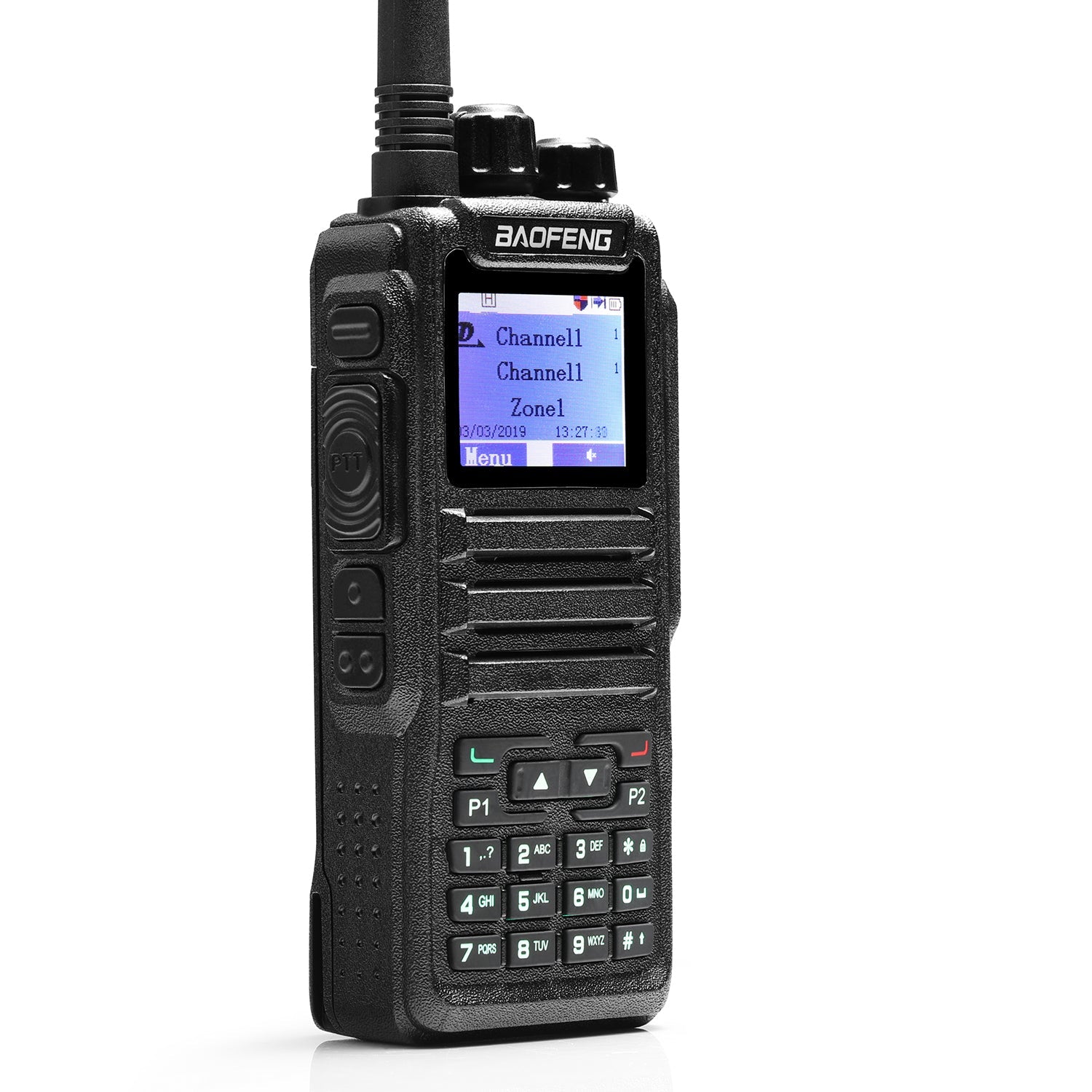
The 2-inch color display is one of its strong points: it offers good resolution and is large enough to clearly show all the necessary information without feeling cluttered or difficult to read.
One particularly appreciated feature is the ability to configure almost everything directly from the radio itself, without necessarily having to rely on a PC.
On several occasions, we found ourselves needing to make quick adjustments in the field—such as adding a repeater or modifying parameters, including DMR settings—directly from the keypad. In these situations, on-radio programming proved to be extremely convenient. Once back home, it’s simply a matter of connecting the programming cable and synchronizing everything with the CPS, making the overall workflow both fast and flexible.

We can modify all the parameters
Design and Ergonomics
From an aesthetic standpoint, the DM-32UV clearly draws inspiration from Motorola-style radios, featuring a more rugged look compared to Baofeng’s typical compact handheld models. The build quality is solid and well in line with its price range. It is a fairly large and bulky radio, which may feel less practical for everyday carry, but this size also conveys a reassuring sense of robustness and durability.
Key elements:
- Color display with good resolution and readability
- Top-mounted rotary knob for frequency changes and menu navigation
- Numerous programmable keys
- Single PTT button and two programmable side keys
- Rear-mounted speaker
- No belt clip included
- Battery secured by screws at the bottom — not ideal for quick swaps, but sturdy and reliable
- Available in multiple color options, a welcome detail for users looking for something less conventional
The radio is available in several colors, an appealing detail for those looking for something less conventional.

Power and Connectivity
The inclusion of USB-C charging is a clear advantage, as it allows the radio to be powered using standard chargers and power banks, without relying on proprietary solutions.
For programming, the radio is equipped with a Kenwood-style two-pin connector, ensuring compatibility with widely available and commonly used programming cables.
DMR Functionality
The DM-32UV is clearly designed with digital operation in mind. DMR is its real strong point and the primary reason to choose this radio.
One particularly positive aspect is that all DMR parameters can be configured directly from the radio, without the need to rely on a PC. Talk Groups, contacts, zones, and the main operating settings are all accessible through the onboard menus.
Users can configure the Color Code, Talk Group, and Time Slot, as well as manage the entire contact list, directly from the radio itself.
Analog Functionality
Unfortunately, this is where some issues emerge. The radio suffers from intermittent squelch problems that, nearly a year after its release, have still not been resolved.
There are no issues on transmit, but in analog reception it is among the poorest-performing radios in our collection.
That said, there is still some hope. As we will see in the next section, there are signs that progress is being made.
Firmware and Community
At present, the radio is not supported by CHIRP. However, there is an active community working on alternative firmware solutions, including a project based on OpenDM32 (with discussions hosted on a Russian forum).
For further details, there is a GitHub repository that collects all available mods and developments:
https://github.com/M7OCM/DM-32UV
This makes the DM-32UV particularly appealing to more experienced users and experimenters who enjoy tweaking and expanding their equipment beyond the stock firmware.
CPS and PC Programming
The official CPS is usable without major issues, but it remains a typical example of Chinese radio software:
- A rather unpolished user interface
- Some features that would be considered basic are missing
- Limited documentation
That said, with a bit of practice, it is still possible to configure the radio without any significant difficulty.
Real-World Use
In everyday use, the DM-32UV performs well, especially in digital DMR mode, where audio quality is impressive both on transmit and receive.
The microphone and speaker deliver better performance than many entry-level radios, while the stock antenna is decent and fully usable.
Its larger size is noticeable when carrying the radio, but it feels stable and well-balanced in the hand. Analog operation is less satisfying, mainly due to the squelch issues, whereas in DMR the radio really shines.
According to available tests (see: https://www.youtube.com/watch?v=hVwR6elLznI), harmonic distortion is fairly low, making the radio suitable for transmission as well.

Technical specifications
| Characteristic | Value |
|---|---|
| Reception | VHF 136–174 MHz UHF 400–480 MHz |
| Additional RX Bands | AM 108–136 MHz FM 65–108 MHz |
| Transmission | 136–174 MHz 400–470 MHz |
| RF Power | 10 W (High) 4 W (Mid) 1 W (Low) |
| Memory Channels | 4.000 |
| Digital Contacts | 50.000 (800 preferiti rapidi) |
| Channel Spacing | 25 kHz / 12.5 kHz |
| Frequency Stability | ±2.5 ppm |
| Battery | 7.4 V – 2500 mAh |
| Operating Temperature | -10 °C / +55 °C |
| Dimensions | 182 × 67 × 41 mm |
| Weight | 350 g |
| Extra | Supporto GPS APRS |
Pros and Cons
Strengths
- Affordable price
- Full DMR support
- Good audio quality
- Readable color display
- Full on-radio programming
- USB-C charging
- GPS/APRS support
- Refined aesthetics for those who appreciate a professional-style form factor
Weaknesses
- Large and bulky size
- No belt clip included
- Analog squelch could be improved
- Basic CPS software
- No CHIRP support at the moment
Conclusion
The Baofeng DM-32UV is a solid and functional entry-level DMR radio, designed for those looking to step into digital radio with a complete and powerful device, without spending a fortune.
It’s neither compact nor perfect and performs better in digital than in analog mode. However, if you appreciate its design and are looking for a strong entry point into the world of DMR, it remains a valid choice.
RadioGuru.it Rating: 7.7 / 10
A good entry-level DMR radio: bulky, but complete and convincing for anyone starting out in digital communications.
--da RadioGuru
La Baofeng DM-32UV è una radio portatile dual band analogico/digitale DMR proposta da una delle aziende cinesi più conosciute nel settore radio.
È una radio pensata per chi vuole entrare nel mondo DMR senza spendere cifre elevate, ma senza rinunciare a una dotazione ricca di funzioni e a una potenza di trasmissione più che adeguata
Il prezzo contenuto la rende accessibile, a patto di accettare qualche compromesso in termini di dimensioni e di una raffinatezza generale che non raggiunge modelli di fascia superiore, ma che resta comunque più che soddisfacente per l’uso pratico.
L’apparato copre le classiche bande VHF e UHF e offre, in ricezione, anche la banda aeronautica, ampliando ulteriormente le possibilità di ascolto.
Il display a colori da 2 pollici è uno dei suoi punti di forza: ha una buona risoluzione ed è sufficientemente ampio da permettere la visualizzazione chiara di tutte le informazioni necessarie, senza risultare affollato o difficile da leggere.
Un aspetto particolarmente apprezzabile è la possibilità di configurare praticamente tutto direttamente dalla radio, senza dover necessariamente passare dal PC.
Ci è capitato più volte di dover intervenire “al volo” per aggiungere un ripetitore o modificare parametri, anche DMR, direttamente sul campo. In queste situazioni la gestione da tastiera si è rivelata estremamente comoda. Una volta rientrati a casa, è poi sufficiente collegare il cavo e sincronizzare il tutto con il CPS, rendendo il flusso di lavoro rapido e flessibile.
Possiamo modificare tutti i parametri
Design ed ergonomia
Dal punto di vista estetico la DM-32UV richiama chiaramente le radio in stile Motorola, con un’impostazione più “rugged” rispetto alle classiche portatili Baofeng compatte. Offre una buona qualità costruttiva, adeguata alla fascia di prezzo. È una radio piuttosto grande e ingombrante, caratteristica che può risultare poco pratica per l’uso quotidiano, ma che restituisce una buona sensazione di solidità.
Elementi principali:
- Display a colori con buona risoluzione e leggibilità
- Rotella superiore per cambio frequenza e navigazione nei menu
- Numerosi tasti programmabili
- PTT singolo e due tasti laterali programmabili
- Altoparlante posteriore
- Assenza della clip da cintura
- Batteria che si svita dal fondo, soluzione poco pratica per un cambio rapido ma robusta
La radio è disponibile in diverse colorazioni, un dettaglio apprezzabile per chi cerca qualcosa di meno standard.
Alimentazione e collegamenti
La presenza della ricarica USB-C è un punto positivo, perché consente di alimentare la radio con power bank e caricabatterie standard, senza soluzioni proprietarie.
Per la programmazione è presente il connettore Kenwood a due pin, compatibile con cavi molto diffusi.
Funzionalità DMR
La DM-32UV nasce chiaramente come radio orientata al digitale.
Il DMR è il vero punto di forza e il motivo principale per cui scegliere questa radio.
Un aspetto molto positivo è che tutti i parametri DMR possono essere configurati direttamente dalla radio, senza dover passare obbligatoriamente dal PC: Talk Group, contatti, zone e impostazioni principali sono accessibili dai menu interni.
Un aspetto molto positivo è che tutti i parametri DMR possono essere configurati direttamente dalla radio, senza dover passare obbligatoriamente dal PC: Talk Group, contatti, zone e impostazioni principali sono accessibili dai menu interni.
É possibile configurare ColorCode, TalkGroup e TimeSlot e anche tutta la rubrica dei contatti.
Funzionalitá Analogiche
Qui putroppo abbiamo qualche problema, infatti la radio ha dei problemi di squelch intermittente, che a quasi un anno dal rilascio non sono ancora stati corretti.
In trasmissione non ci sono problemi, ma in ricezione (analogica )é tra le peggiori radio in nostro possesso.
Ci sono peró speranze, infatti come vedremo nel prossimo paragrafo qualcosa si sta muovendo.
Firmware e community
Attualmente la radio non è supportata da CHIRP, ma esiste una community attiva che sta lavorando su firmware alternativi, incluso un progetto basato su OpenDM32 (link al forum russo).
Per approfondimenti c’é una repo github che raccoglie tutte le mod:https://github.com/M7OCM/DM-32UV
Questo rende la DM-32UV interessante anche per utenti più esperti o sperimentatori.
CPS e programmazione da PC
Il CPS ufficiale è utilizzabile senza particolari problemi, ma resta uno dei classici software cinesi:
- interfaccia poco curata
- mancano alcune funzionalità considerate basilari
- documentazione limitata
Con un minimo di pratica, però, si riesce a configurare la radio senza difficoltà rilevanti.
Uso reale
Nell’uso quotidiano la DM-32UV si comporta bene soprattutto in digitale DMR, dove la qualità audio è convincente sia in trasmissione che in ricezione.
Il microfono e l’altoparlante offrono una resa superiore a molte radio entry level, mentre l’antenna di serie è discreta e utilizzabile.
Le dimensioni importanti si fanno sentire nel trasporto, ma la radio risulta stabile in mano e ben bilanciata. In analogico l’esperienza è meno convincente, principalmente a causa dello squelch, mentre in DMR la radio esprime il meglio di sé.
Dai test disponibili (vedi: https://www.youtube.com/watch?v=hVwR6elLznI), le armoniche risultano abbastanza pulite, rendendo la radio idonea anche alla trasmissione.
Specifiche tecniche
| Caratteristica | Valore |
|---|---|
| Ricezione | VHF 136–174 MHz UHF 400–480 MHz |
| Bande aggiuntive RX | AM 108–136 MHz FM 65–108 MHz |
| Trasmissione | 136–174 MHz 400–470 MHz |
| Potenza RF | 10 W (High) 4 W (Mid) 1 W (Low) |
| Canali di memoria | 4.000 |
| Contatti digitali | 50.000 (800 preferiti rapidi) |
| Spaziatura canali | 25 kHz / 12.5 kHz |
| Stabilità di frequenza | ±2.5 ppm |
| Batteria | 7.4 V – 2500 mAh |
| Temperatura operativa | -10 °C / +55 °C |
| Dimensioni | 182 × 67 × 41 mm |
| Peso | 350 g |
| Extra | Supporto GPS APRS |
Pro e contro
Punti di forza
- Prezzo contenuto
- Supporto DMR completo
- Buona qualità audio
- Display a colori leggibile
- Programmazione completa direttamente dalla radio
- Ricarica USB-C
- Supporto GPS/APRS
- Estetica curata per chi apprezza il form factor professionale
Punti di debolezza
- Dimensioni importanti
- Assenza della clip da cintura
- Squelch analogico migliorabile
- CPS essenziale
- Nessun supporto CHIRP al momento
Conclusioni
La Baofeng DM-32UV è una radio DMR entry level solida e funzionale, pensata per chi vuole avvicinarsi al digitale con un apparato completo e potente, senza affrontare spese elevate.
Non è compatta, non è perfetta e rende meglio in digitale che in analogico, ma se apprezzate l’estetica e cercate un buon punto di ingresso nel mondo DMR, resta una scelta valida.
Voto RadioGuru.it: 7.7 / 10
Buona radio DMR entry level: ingombrante, ma completa e convincente per chi vuole iniziare con il digitale.

1 comment
My bright green DM-32UV came with a hard plastic holster with a belt clip. The radio can be pulled from the holster with no issues, but is reasonably secure. It also included a soft holster that is compatible with Molly Pack systems. The soft holster is very secure. I also received a top loaded goose-neck antenna.
73,
NK5H